
Many families describe the same experience, even when the diagnosis or age is different.
Movement looks simple from the outside, but inside the body it feels hard, tiring, or unpredictable.
- A child collapses when sitting for too long.
- A teenager avoids standing tasks because their body fatigues quickly.
- An adult feels stiff, restricted, or uncomfortable before movement even begins.
At The Timmermans Method, we do not see this as a lack of effort or motivation. We see it as a nervous system that needs clearer, more organized input.
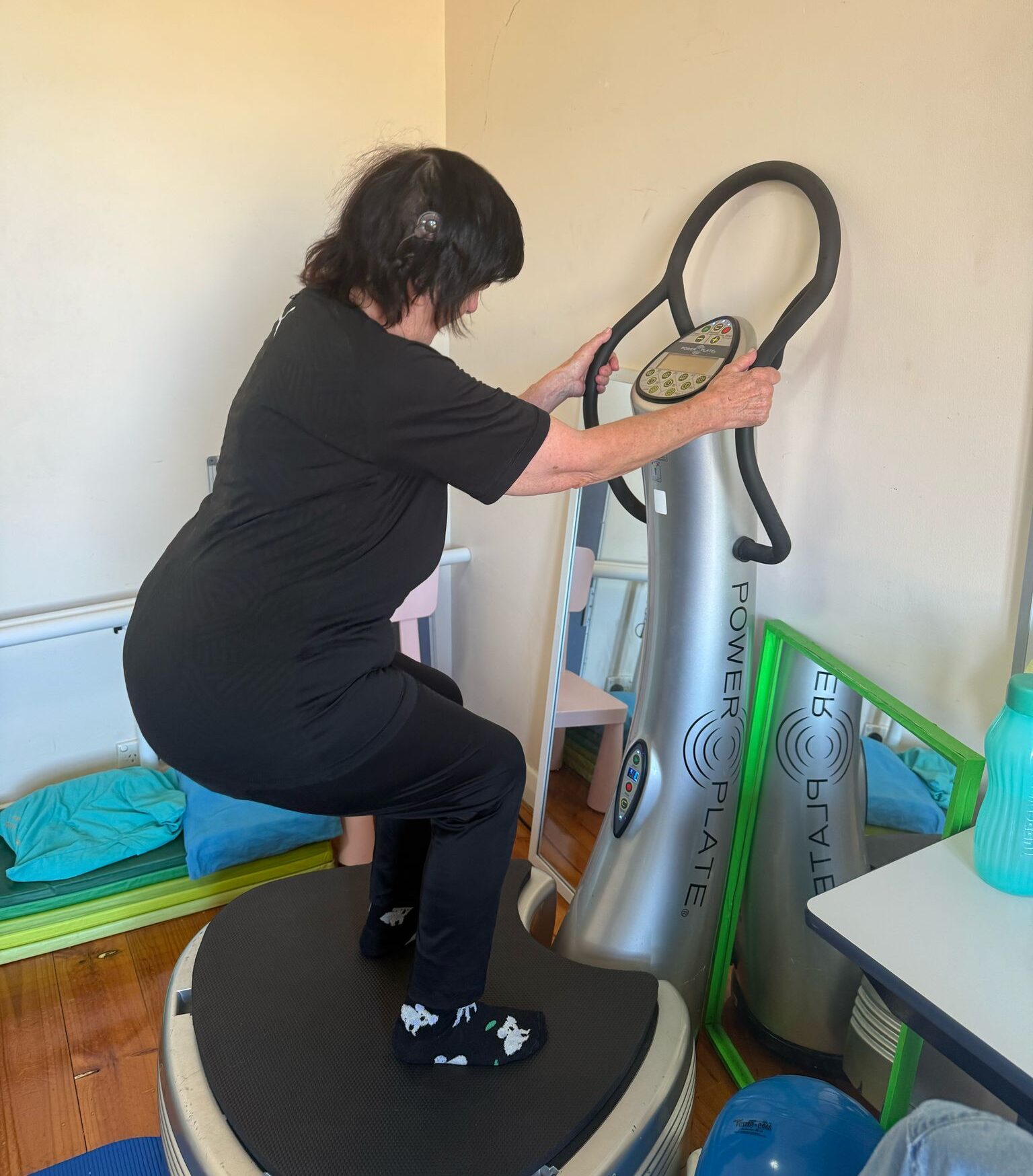
This is where Power Plate vibration therapy plays an important role within our intensive physiotherapy programs. Not as a quick fix, and not as a replacement for movement, but as a way to help the body and brain communicate more effectively so movement can become easier, more confident, and more functional.
Muscle Tone Shapes Movement Before Movement Begins
Muscle tone is the background level of activation in the body. It influences posture, balance, endurance, and how efficiently we move.
When tone is well regulated, movement feels automatic. When tone is altered, movement requires constant effort and attention.
Low muscle tone, often described as hypotonia, can make the body feel unstable and difficult to hold together. High muscle tone, sometimes referred to as hypertonia or spasticity, can make the body feel stiff, restricted, or uncomfortable.
Both patterns can affect children, teens, and adults across a wide range of neurological and developmental conditions. Both can limit independence and participation if the nervous system is not supported appropriately.
Power Plate is one of the tools we use to support tone regulation within our intensive therapy model, as outlined in our overview of gentle vibration and its clinical impact.
What Power Plate Vibration Therapy Actually Does
The Power Plate is a clinically backed whole-body vibration platform. It delivers gentle, controlled vibration through the body, prompting muscles to contract and relax automatically through natural reflex pathways.
These reflexive contractions occur many times per second and do not rely on conscious effort. Multiple muscle groups activate simultaneously, sending strong sensory and proprioceptive information back to the brain.
In practical terms, the Power Plate helps the nervous system feel the body more clearly, which is essential for improving movement quality and control.
Supporting Bodies With Low Muscle Tone
For individuals with hypotonia, the primary challenge is often not strength alone, but activation and endurance.
Muscles may be capable of working, but they struggle to switch on consistently or remain active long enough to support posture and movement. Sitting collapses, standing feels exhausting, and walking requires enormous concentration.
Power Plate supports low muscle tone by providing rapid, reflexive muscle activation that helps the body feel more organized and stable, without overloading joints or requiring complex instructions.
In our clinics, Power Plate is commonly used to support bodies with low tone by improving:
- Baseline muscle activation and postural stability
- Endurance for upright positions and movement tasks
- Body awareness and proprioception
- Confidence to engage in crawling, standing, stepping, and play
These changes allow children to participate more fully in therapy and everyday activities. For teens and adults, improved activation often translates into better balance, improved tolerance for standing and transfers, and reduced fatigue during daily movement.
Supporting Bodies With High Muscle Tone
High muscle tone presents a different challenge. Muscles may remain active even when the body needs to relax, making movement stiff, restricted, or uncomfortable.
Stretching can be difficult. Strengthening can increase stiffness if not carefully managed. Movement often feels effortful before it even begins.
Power Plate supports regulation rather than force.
The gentle vibration provides consistent sensory input that helps calm the nervous system and reduce excessive muscle activity. When used appropriately, it helps the body transition into movement more comfortably and with less resistance.
For individuals with high tone, Power Plate is commonly used to:
- Reduced muscle stiffness and improved comfort
- Improved circulation and tissue flexibility
- Smoother transitions into functional movement
- Better readiness for stretching, balance, and gait activities
This approach is explored in more depth in our clinical work using Power Plate for cerebral palsy and related neurological conditions.
Power Plate As Preparation, Not A Standalone Therapy
One of the most important messages we share with families is that Power Plate does not replace movement-based therapy. It enhances it.
The Power Plate is often used at the beginning of sessions, or between activities, to prepare the body and nervous system. This preparation allows individuals to get more out of active therapy tasks such as balance training, strengthening, walking practice, and functional movement.
By improving readiness and regulation, therapy sessions can focus on movement quality rather than fighting fatigue or stiffness.
The brain adapts through repetition, relevance, and intensity.
Short, infrequent exposure to movement is rarely enough to create lasting change, particularly for individuals with neurological or developmental challenges. This is why we focus on intensive therapy blocks that give the brain the input it needs to develop new movement pathways.
Power Plate supports this process by delivering efficient, repeatable neuromuscular input that complements active therapy. Within intensive programs, it helps reinforce learning, reduce fatigue, and improve carryover into daily life.
Families often tell us that progress achieved during intensive therapy feels more stable and meaningful when tools like Power Plate are used thoughtfully within the program.
Progress does not always arrive as a dramatic milestone. More often, it shows up in everyday moments.
- A child is stronger and stands longer without collapsing.
- Stretching becomes less distressing.
- Range of motion improves.
- Walking looks smoother and more controlled.
- Endurance improves during daily routines.
- Confidence grows because movement feels safer and more predictable.
These changes matter. They are signs that the nervous system is organizing itself more effectively.
Many families choose to integrate Power Plate into structured home programs following intensive therapy. This allows continued reinforcement of gains while supporting family involvement in the therapy process.
Home use is always guided and individualized, ensuring Power Plate remains a supportive tool rather than a passive exercise.
If you are wondering whether Power Plate vibration therapy could support your child, teen, or yourself, we invite you to start a conversation with us.
Send us a message. Ask questions. Share what you are noticing.
We will also be attending the two-day Source Kids Disability Expo in Adelaide, and we’d love to meet you there. Come, tell us your story. Let’s discuss more about how we use tools like the Power Plate within our intensive therapy programs.
The right therapy and support at the right time helps you see it.