
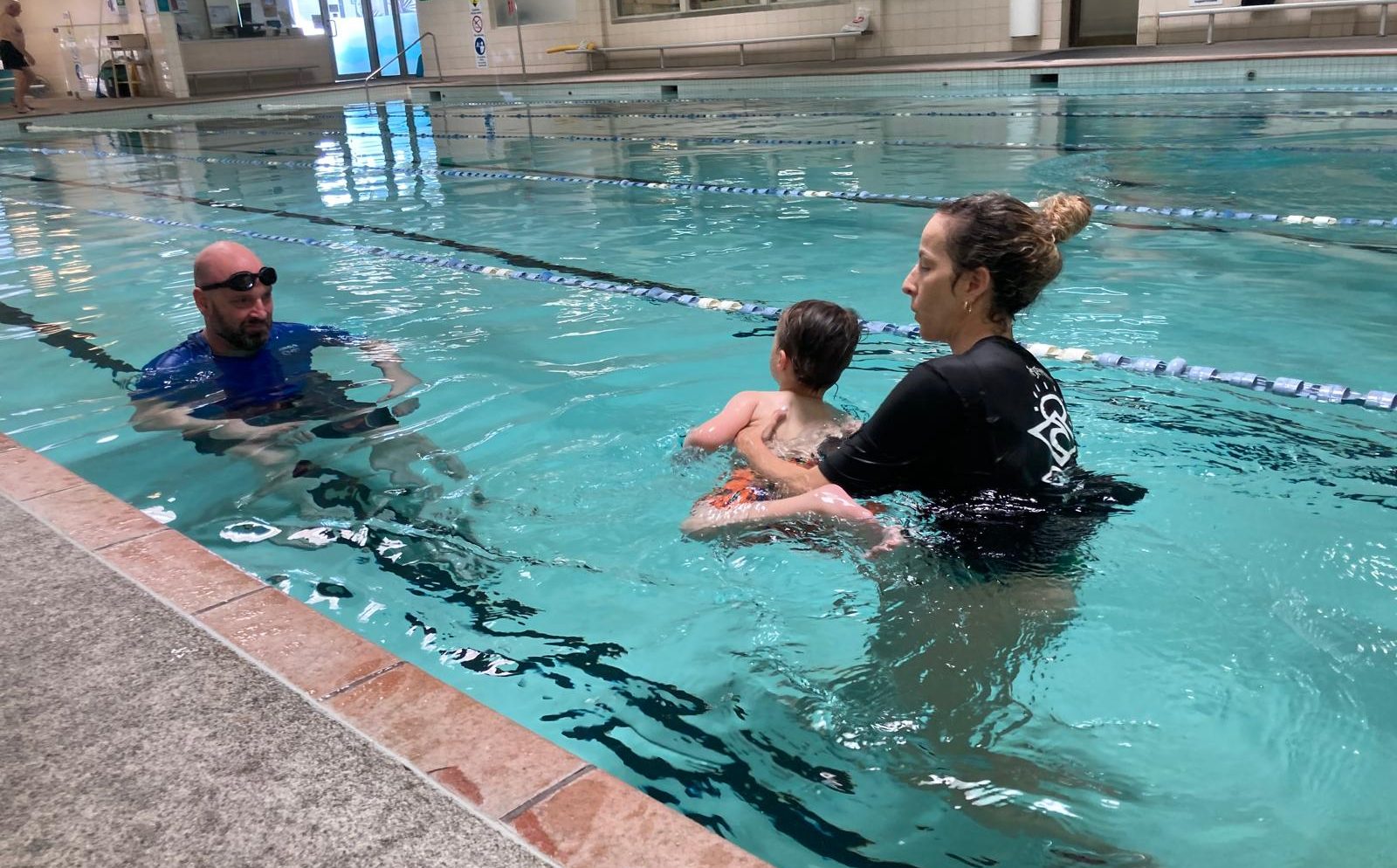
Hydrotherapy, or aquatherapy, is simply exercise done in water. We use it to support recovery, strength, balance and overall movement. It has been around for a long time, but in physiotherapy today it is used in a more structured way, especially for neurological and musculoskeletal rehab.
At the end of the day, it is not complicated. It is just using water properly to help the body move better.
When someone gets into warm water, the difference is noticeable. The body feels lighter. Joints are not carrying as much load. Injured areas are not under the same strain. And most importantly, people are usually less afraid of falling.
For those who feel unsteady or anxious about movement, that feeling of support can change everything.
The goals are practical and straightforward.
- Relax tight muscles
- Improve joint range of motion
- Build strength and endurance
- Reduce pain and stiffness
- Improve coordination and balance
- Increase confidence with movement
Hydrotherapy creates a safe and low risk environment where individuals can practise movements that may feel too difficult or unsafe on land.
And that safety matters.
It Is Not a Cure. It Is a Tool.
It is important to say this clearly.
Hydrotherapy is not a miracle treatment. It does not cure neurological conditions. It does not replace surgery, medication or medical advice. What it does exceptionally well is manage symptoms and create opportunity for movement.
Hydrotherapy may help reduce pain, muscle tightness, joint stiffness, swelling and general discomfort. It can support individuals living with osteoarthritis, fibromyalgia, Parkinson’s disease, neuropathy, ankylosing spondylitis, multiple sclerosis and cerebral palsy, among others.
It does not remove the condition. But it can improve quality of life. And that is meaningful.
Sometimes progress does not start with curing something. Sometimes it starts with helping someone feel capable again.
Why Water Is So Powerful for Rehabilitation?
Water changes the mechanical demands placed on the body.
1. Buoyancy
Buoyancy reduces body weight. Depending on water depth, a person may be bearing only a fraction of their full weight. This reduces joint compression and allows movement with less pain.
For someone who relies on a walking aid on land, this can mean practising stepping, lunges or controlled squats in the water without the same reliance on support.
That moment of independence builds more than muscle. It builds belief.
2. Resistance
Water provides natural resistance in every direction. Unlike traditional weights, resistance increases with speed. Small changes in movement create subtle changes in difficulty.
This allows for controlled strengthening without heavy loading. Movements remain functional, yet the muscles are working constantly.
3. Hydrostatic Pressure
The gentle pressure of the water can help with swelling and circulation. That is true and for many people it also helps calm the body, which can ease pain.
4. Warmth
Warm water promotes muscle relaxation. It also increases blood flow. Tight muscles often soften. Stiff joints often move more freely.
When pain decreases and fear decreases, movement increases.
And movement is where learning happens.
Learning to Balance in Water
Balance is not just about standing upright. It is about how the brain interprets information from the body and responds to changes.
Balance relies on three main systems:
- Visual input
- Vestibular input
- Proprioceptive input
In water, proprioceptive and sensory feedback are amplified. Changes in body position, speed and direction are felt clearly. The nervous system receives richer information, which improves motor learning.
In hydrotherapy sessions, we intentionally structure activities that challenge:
- Postural control
- Weight shifting
- Reactive balance
- Direction changes
- Transitional movements
Because the water supports the body, individuals can safely practise losing and regaining balance without the same risk of falling.
That repeated exposure builds automatic responses. And automatic responses are what true balance relies on.
Developing Body Awareness and Proprioception
Body awareness, or proprioception, is the ability to understand where your body is in space without looking.
For many children, teens and adults with neurological conditions, this internal awareness is reduced or inconsistent. Movements may feel unpredictable. Coordination may be delayed. Stability may be difficult.
Water enhances proprioceptive input because it constantly surrounds the body. Every movement meets resistance. Every shift in posture creates feedback.
This allows individuals to:
- Practise slow, controlled movements
- Explore different body positions safely
- Improve timing and coordination
- Develop smoother transitions between movements
Because buoyancy supports the body, individuals can attempt movements that may not yet be achievable on land.
This increases the opportunity for success. And success builds confidence.
Hydrotherapy Within Intensive Physiotherapy Programs
At The Timmermans Method, hydrotherapy is not a standalone service. It is integrated into intensive physiotherapy programs when clinically appropriate.
Intensive therapy works because of repetition and consistency. The pool environment allows high repetition with reduced joint stress, which supports faster motor learning and improved endurance.
When combined with land-based therapy, hydrotherapy supports:
- Functional walking practice
- Sit-to-stand transitions
- Gait training
- Core stability
- Motor planning
- Cardiovascular endurance
As individuals improve, we progressively reduce water depth to increase weight bearing. We reduce external support. We refine movement quality rather than simply increasing difficulty.
Progress is monitored through structured goal setting. This may include:
- Completing specific repetitions
- Maintaining balance for a set duration
- Walking a measured distance
- Performing transitional movements independently
Once goals are achieved consistently, we progress safely.
It is not about pushing harder. It is about moving better.
A Family-Centred Approach
Hydrotherapy at The Timmermans Method is delivered within a family-centred framework. Parents and carers are involved in understanding the goals of therapy. Education is provided so strategies can continue outside the pool.
Movement learning does not stop at the clinic. It carries into daily routines.
We work across all ages, ensuring goals are relevant, meaningful and functional for each stage of life.
Safety and Clinical Considerations
Safety is always prioritised.
Sessions begin in shallow water while assessing comfort, balance and swimming ability. Entry and exit strategies are planned in advance. Clinical hygiene standards are maintained carefully.
Hydrotherapy may not be appropriate for individuals with open wounds, uncontrolled medical conditions or certain immune vulnerabilities without medical clearance.
A proper assessment ensures hydrotherapy is introduced at the right time and in the right way.
There Is Something Human About Water
Beyond biomechanics and neurology, there is something else.
People often feel calmer in water. Shoulders relax. Breathing steadies. Fear reduces.
When someone who struggles on land realises they can move more freely in water, you see the shift. They try more. They smile more. They stay engaged. That emotional shift matters just as much as the physical one.
Hydrotherapy becomes a place where individuals reconnect with their bodies rather than fight against them.
A Purposeful Tool for Confident Movement
At The Timmermans Method, hydrotherapy is used intentionally to support:
- Balance development
- Body awareness
- Movement coordination
- Functional independence
- Confidence with mobility
It is structured. It is goal oriented. It is integrated into broader physiotherapy programs. It is never about replacing medical care. It is about creating the right environment for learning.
If you would like to learn whether hydrotherapy may benefit you or your child, we welcome you to contact our team. A conversation is the first step toward understanding what approach best supports your goals.
Because sometimes progress begins when the body feels safe enough to try.